
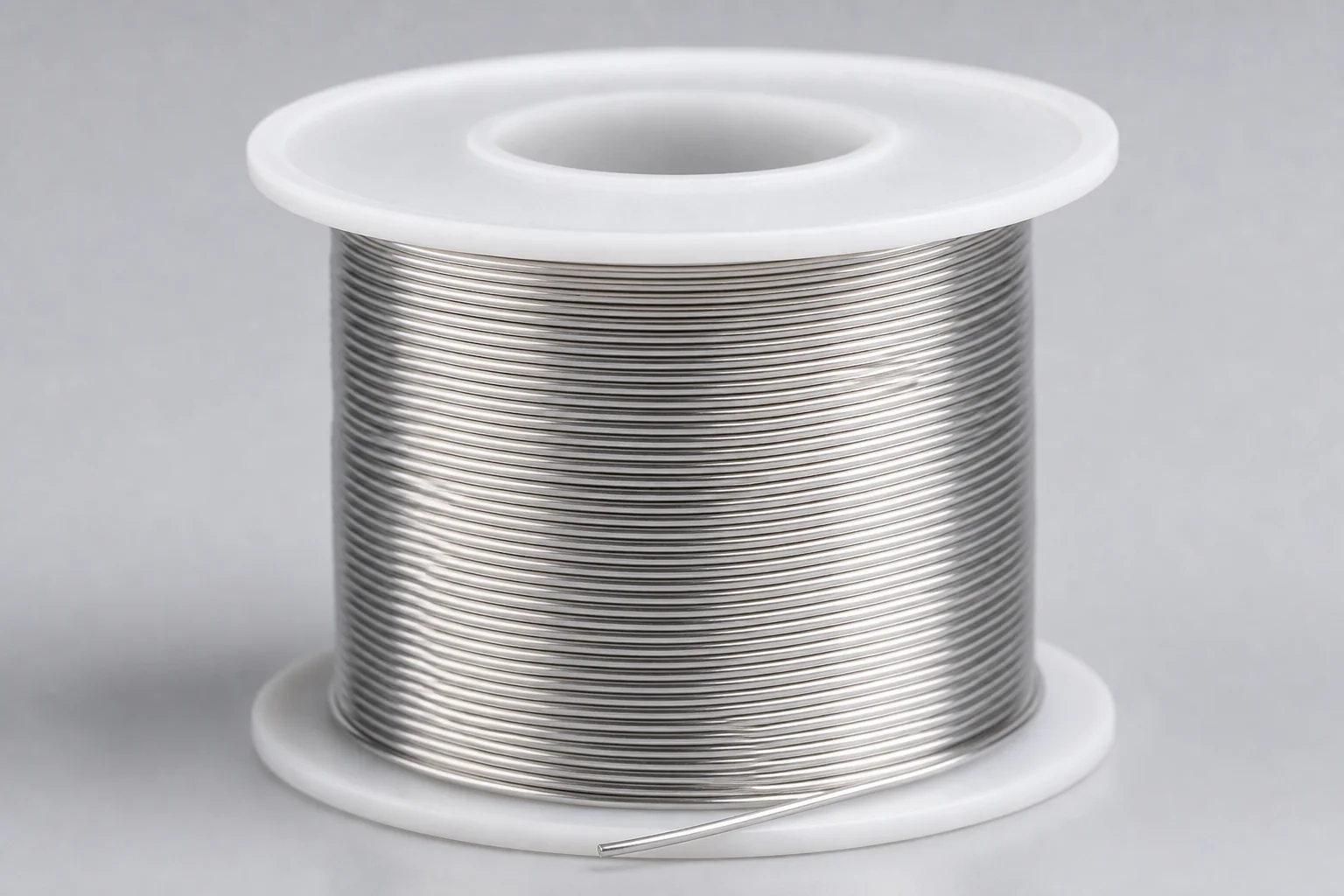
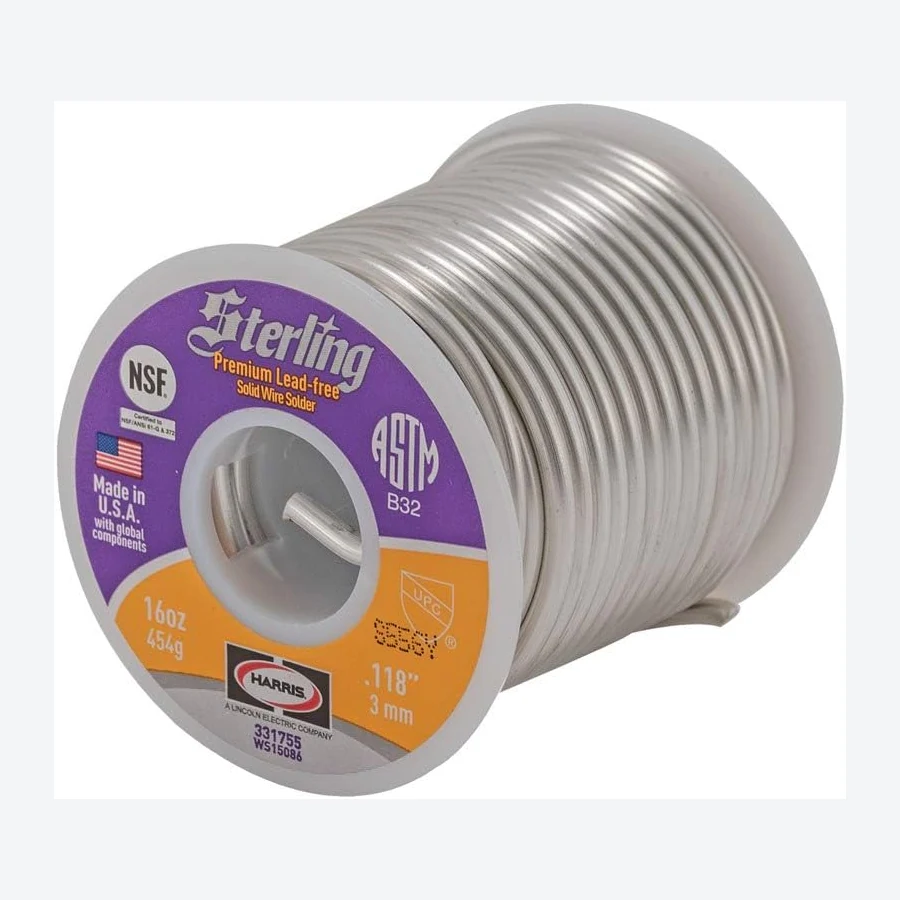
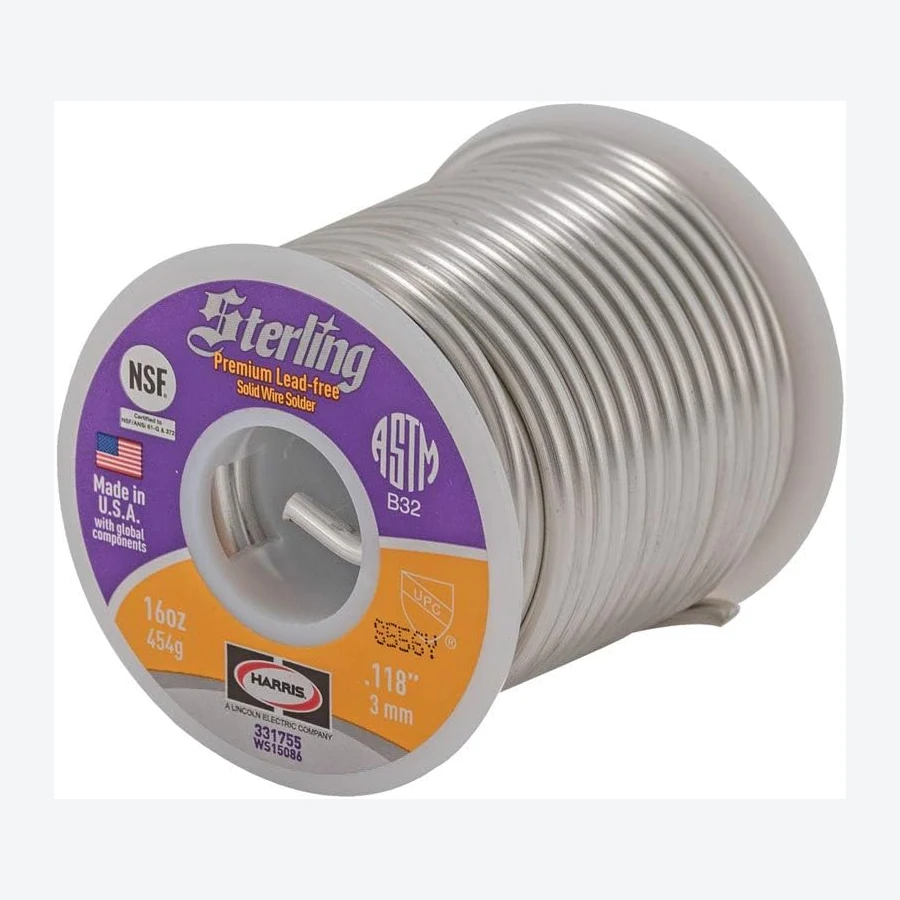
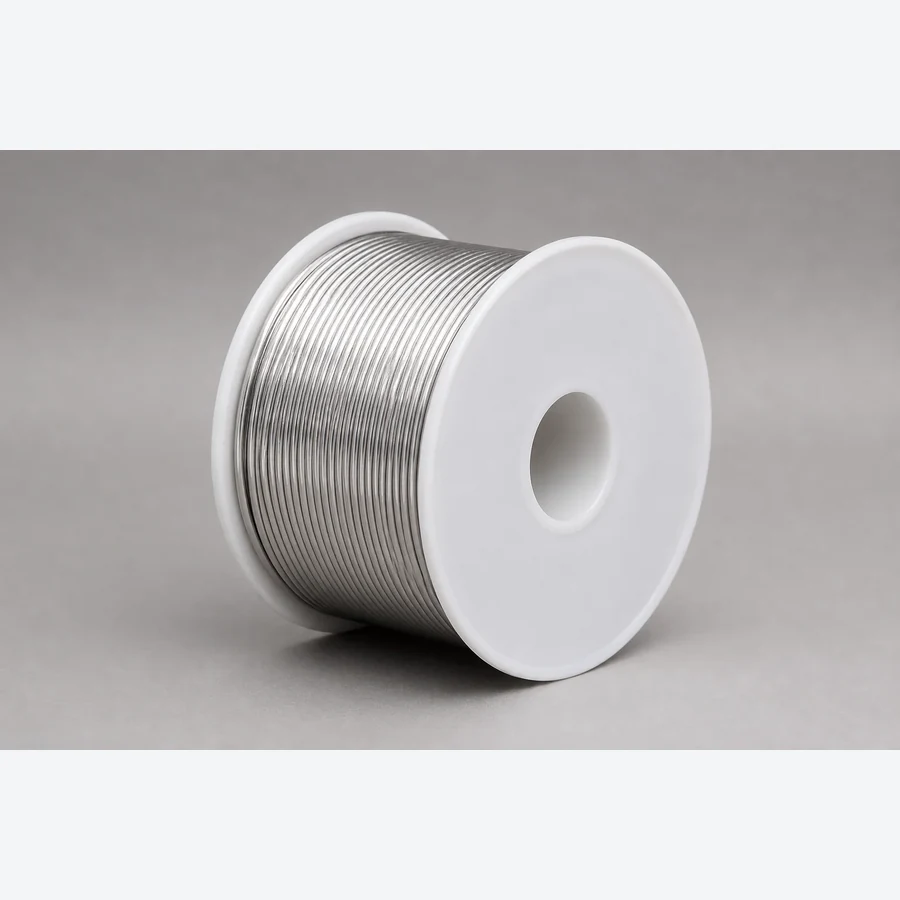
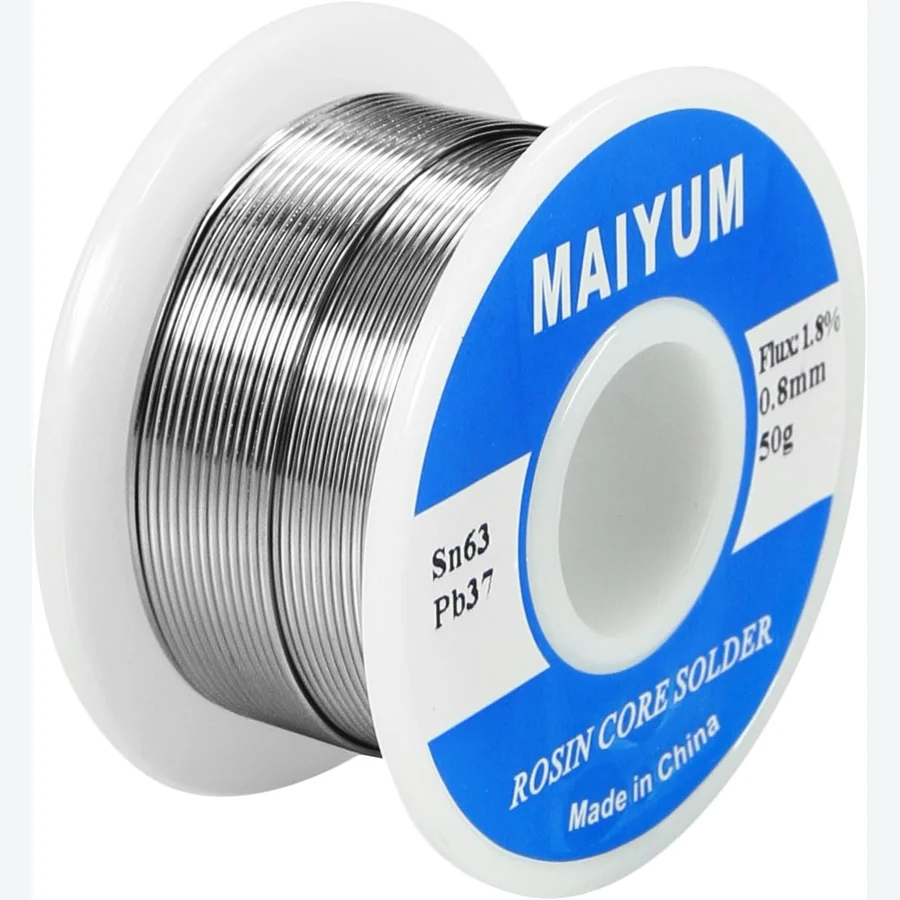
Silver-bearing solder occupies a middle ground between plain tin-copper wire and full brazing alloys. Sterling silver-bearing solder adds controlled silver to a lead-free tin-copper base so artisans, instrument makers, and precision plumbers get smoother wetting on brass and copper without jumping to temperatures that warp thin stock or discolor finished surfaces.
Review alloy specifications for tensile data and NSF marks on the broader Sterling line, and study melting point technique before your first silver-bearing joint — silver shifts flow timing slightly compared to standard tin-copper.
Why add silver
Silver in soldering alloys improves wetting and spread on copper and brass while keeping melt temperatures in a torch-friendly band near 410°F. The result is finer fillets, fewer cold spots on mixed-metal joints, and a joint color that blends more naturally on polished brass hardware. You are not brazing — you are still sweating — but the meniscus behaves with less stubborn surface tension.
Tradeoff: silver-bearing wire costs more per ounce than plain tin-copper. Reserve it for work where appearance, fit-up tolerance, or joint access justifies the premium. Production plumbers on hidden rough-in often stay on standard Sterling; visible escutcheons, custom railings, and gallery pieces are where silver-bearing wire earns its place.
Artisan applications
Metalworkers joining copper, brass, and bronze decorative elements need predictable flow into tight lands without flooding scrollwork. Fine gauge silver-bearing Sterling feeds in small increments so you can build a fillet without drowning adjacent detail. Sculptors and lighting fabricators report fewer rework passes when transitioning from steel armatures to copper skins at sweat joints.
Jewelry-scale work demands clean prep — even trace oils from fingerprints block silver-bearing wetting. Abrade mating surfaces, degrease with appropriate solvents, and flux immediately before heat. Patina chemicals applied after soldering will highlight any starved areas, so inspect under magnification before antiquing.
Precision plumbing uses
High-end residential trim sometimes exposes sweat joints behind glass shower walls or open mechanical displays. Silver-bearing Sterling produces cleaner fillets when owners will see the copper. Instrumentation and laboratory benching with small-diameter tube also benefit from fine wire and improved wetting on brass valve bodies.
Silver-bearing alloy is still lead-free and NSF-listed on qualified Sterling product forms — confirm certificates for potable submittals. For standard underground and wall-cavity rough-in, plain tin-copper Sterling documented on our lead-free page often satisfies code at lower material cost.
Wire gauge selection
Match wire diameter to joint volume. 0.018-inch fine wire suits capillary paths smaller than typical plumbing cups — instrument ports, miniature compression transitions, and layered craft assemblies. Step up to 0.025-inch when filling standard half-inch fitting lands on architectural copper.
Pocket 4 oz and 8 oz spools keep silver-bearing wire clean between sessions. Large production spools make sense for shops running repeatable brass-copper subassemblies daily. Avoid borrowing plumbing-sized wire for filigree work — excess feed floods detail; under-feeding with oversized wire still leaves voids because you cannot place alloy precisely.
Heat and flux
Silver-bearing Sterling still demands fitting-first heating. Direct flame on the wire creates balls that sit on the surface instead of wicking. Use a soft flame on pencil torches for small work; micro-joints overheat in seconds. When flux clears and copper dulls, touch wire to the joint mouth and let capillary pull do the work.
Pair with flux matched to the alloy window — our paste guide covers vertical applications where liquid flux drips onto finished surfaces. Paste flux on architectural sweats protects adjacent patina while preserving activation timing similar to liquid chemistry.
Versus plain tin-copper
Plain Sterling tin-copper delivers 7130 psi tensile strength and NSF potable listings for bulk plumbing. Silver-bearing variants trade a modest cost increase for improved aesthetics and wetting on brass. Mechanical strength on qualified copper joints remains in the same class when technique is correct — choose silver for workflow and appearance, not because plain alloy is weak.
Do not confuse silver-bearing solder with high-silver brazing rod. Brazing flows above 1,100°F and requires different flux, PPE, and code checks. Sterling silver-bearing wire stays in the soldering category — same torches, same joint prep discipline, same natural cooldown rules.
Brass transition tips
Brass fittings and bronze castings oxidize faster than copper tube during heating. Silver-bearing Sterling compensates somewhat, but prep still wins: light abrasion on the land, fresh flux, and even preheat around the cup. Avoid overheating yellow brass — zinc fumes and pink discoloration signal you left the ideal window.
When joining copper tube to brass valves, heat the heavier brass mass longer before feeding wire at the copper interface. The copper side often reaches flow temperature first; premature feed plates alloy on the tube exterior. Rotate flame gently — dramatic pulsing oxidizes both metals unevenly.
Finishing and cleanup
After cooldown, remove flux residue before patina or clear coat. Silver-bearing joints pickle similarly to plain tin-copper but show fewer grainy islands when flux timing was correct. Wire-brush only when design allows — architectural pieces may need chemical flush or ultrasonic cleaning instead of abrasive contact.
Document alloy type in shop notebooks when mixing standard and silver-bearing Sterling on one commission. Future repair techs need to know what is in the joint before they apply heat — label subassemblies in hidden areas with date and alloy code.
Buying checklist
Choose silver-bearing Sterling when: joints are visible, brass is involved, wire path is narrow, or fillet cosmetics matter. Stay on tin-copper Sterling when: joints are concealed, volume is high, and NSF potable economy drives the bid. Always verify: diameter, spool size, flux pairing, and melt technique on scrap before production pieces.
Silver-bearing solder rewards patience. The alloy chemistry assists wetting; your prep and heat discipline still determine whether anyone notices the joint — or notices the craft.