
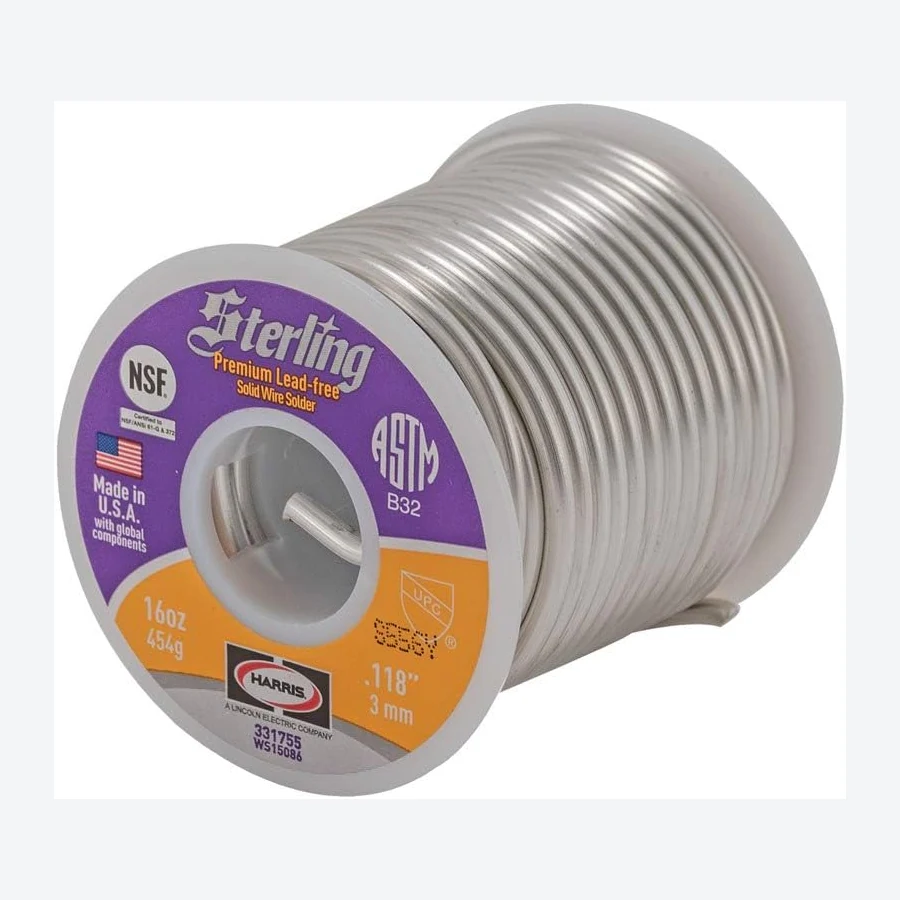
Solid wire remains the default for horizontal copper sweats — but overhead mains, tight mechanical rooms, and detailed artisan assemblies often fight gravity and access. Sterling solder paste and matched flux paste formats place alloy and activator where wire cannot reach cleanly. The chemistry still targets the same 410°F (210°C) window as Sterling solid wire; only the delivery method changes.
Read melting point technique before switching formats, and confirm alloy specs when submittals require NSF-listed components on potable lines.
Paste versus wire
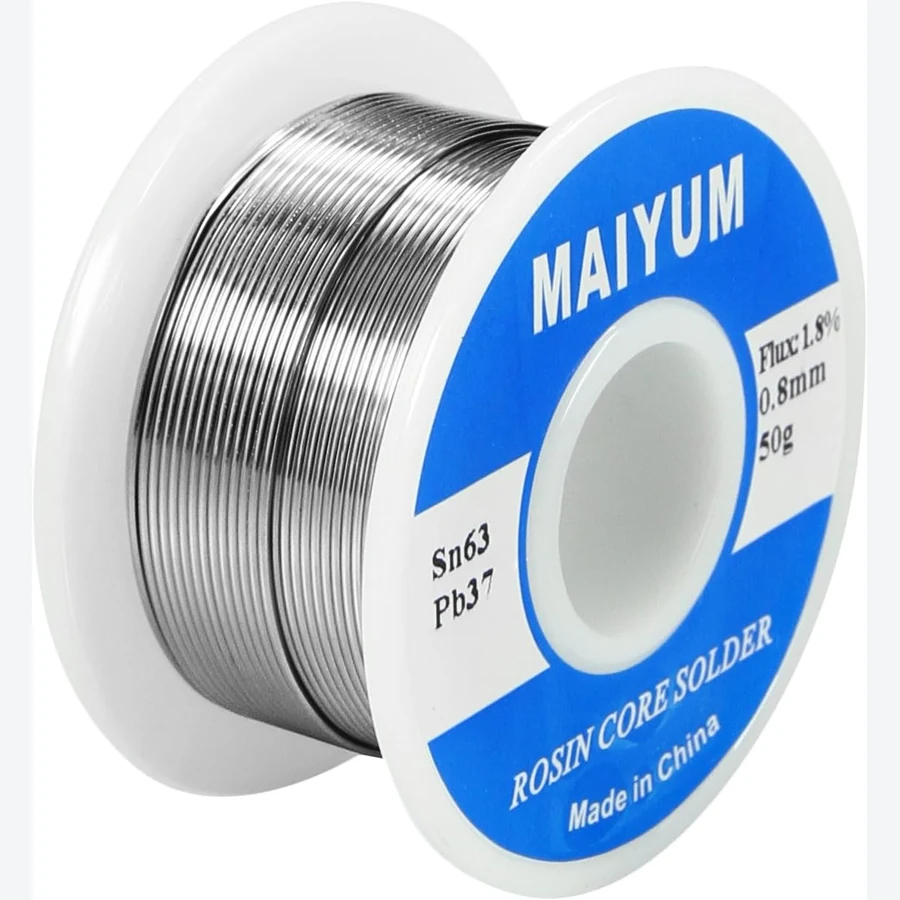
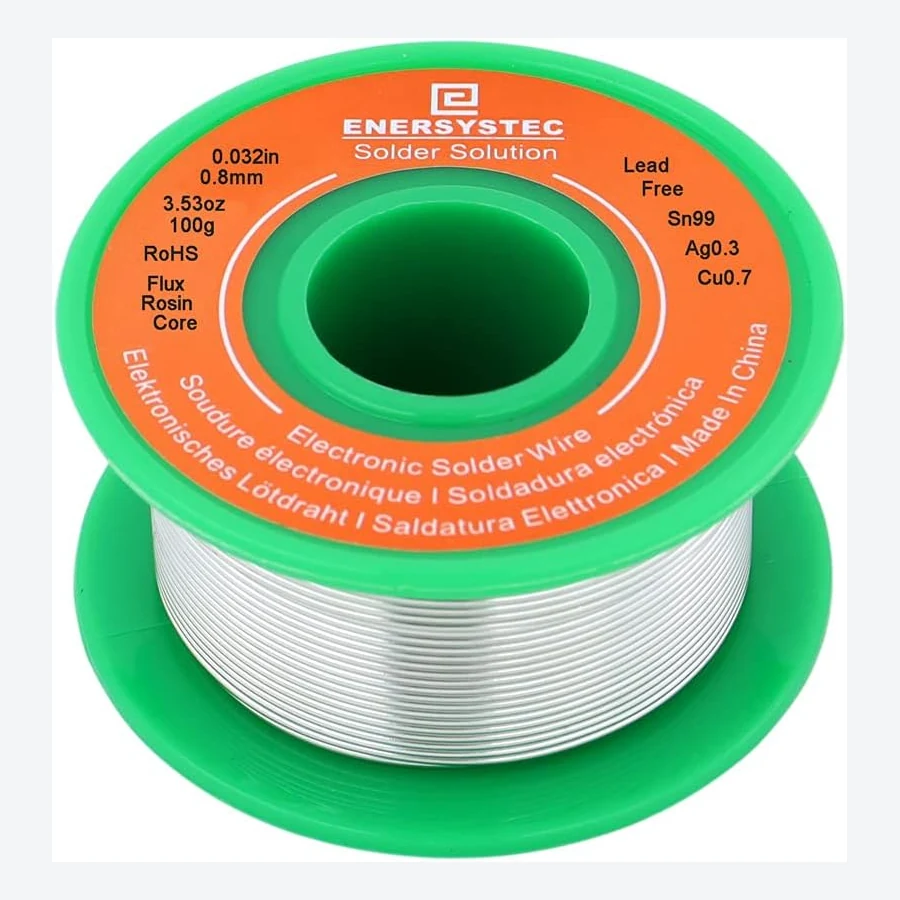
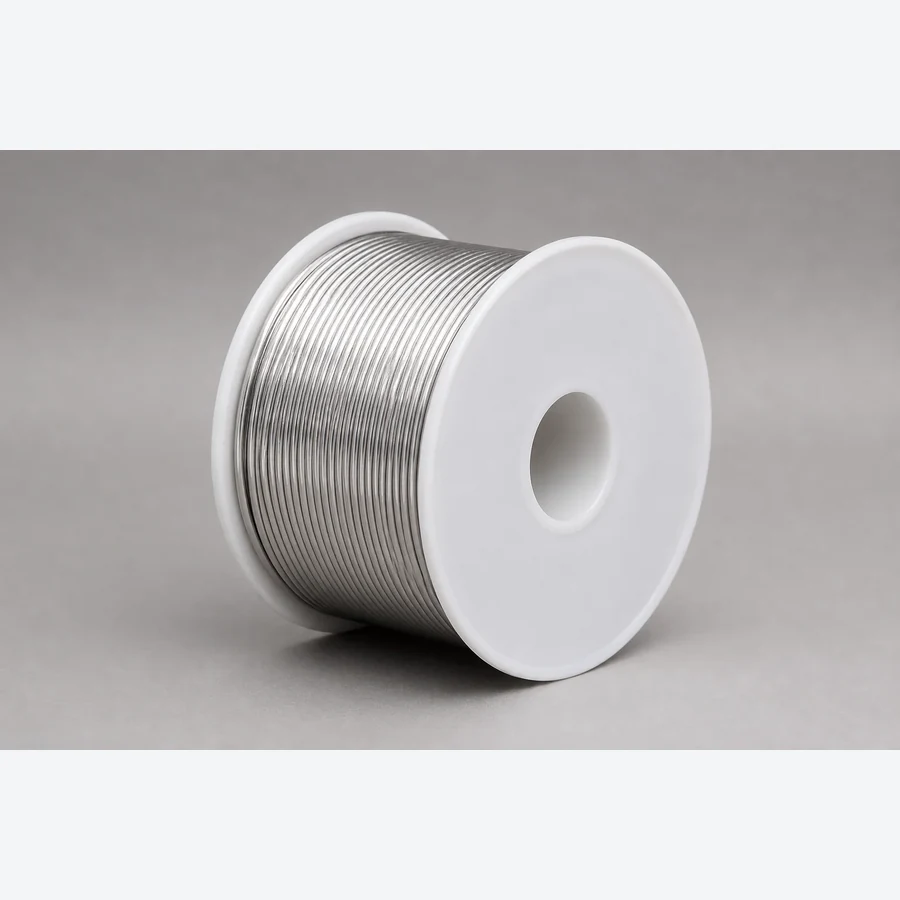
Solid wire feeds alloy during heating via capillary pull — the technician controls rate by hand. Solder paste pre-positions finely divided alloy mixed with flux vehicle so heat collapses the deposit into the joint. Wire excels on open, horizontal cups; paste excels on vertical rises, ceiling stubs, and confined spaces where feeding wire uphill produces drips and cold spots.
Paste is not a substitute for fit-up discipline. Gap-tolerant "blob and hope" approaches fail pressure tests even when paste flows visibly. Mating surfaces still need proper land engagement, deburr, and cleaning — paste simply delivers alloy more predictably in awkward orientations.
When to choose paste
Choose paste when gravity works against wire feed — overhead domestic mains, vertical stacks in chases, and valve bodies with limited access. Artisans use syringe paste on layered sculptures where a wire loop would disturb adjacent detail. Service techs carry syringes for one-off repairs in crawlspaces too tight for spool handling.
Stay on solid wire for production rough-in on open joist bays where speed and economy favor spools. Many shops stock both: wire for volume, paste for problem orientations. That hybrid approach reduces rework without inflating material cost on every joint.
Jar application method
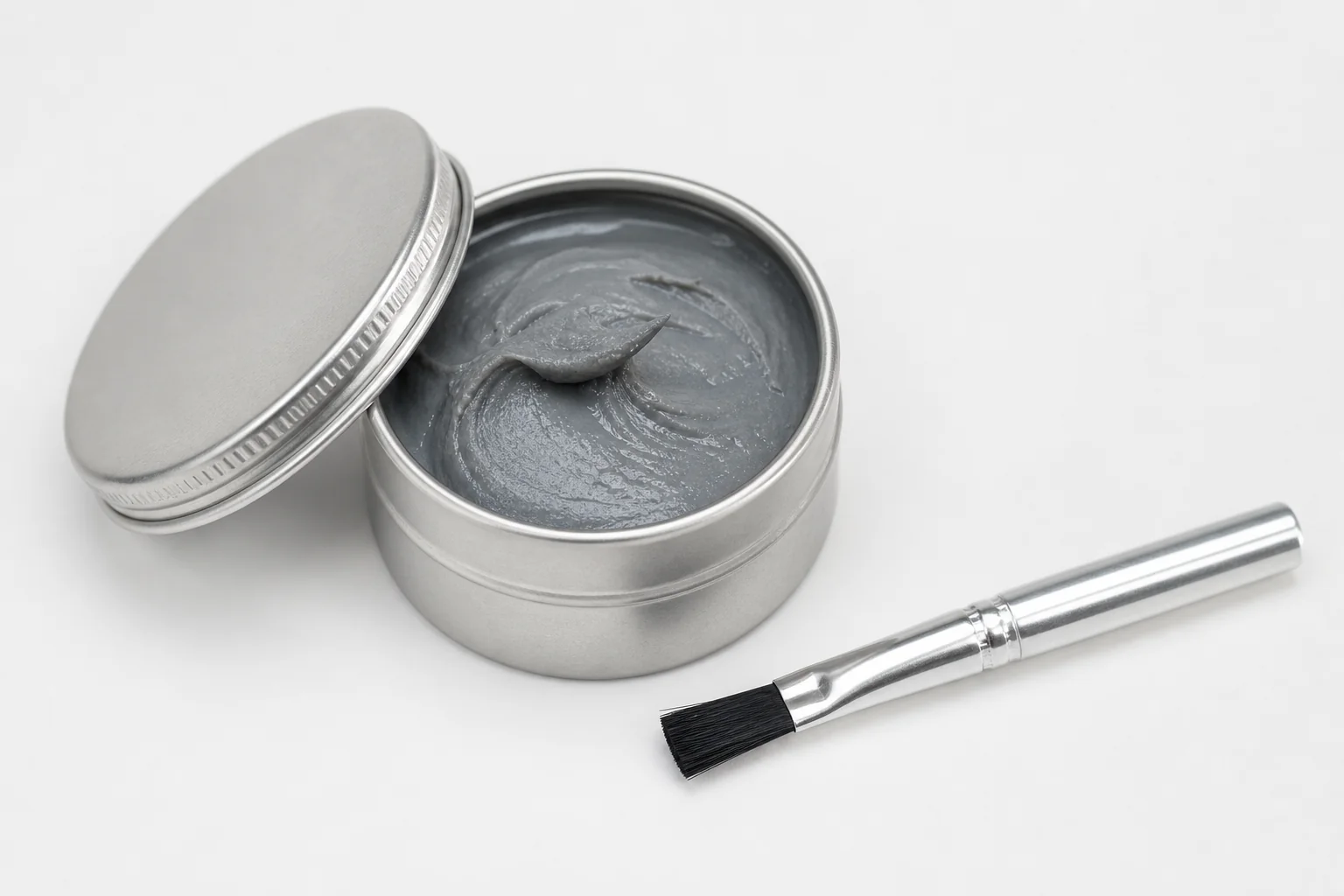
Tin paste jars suit brush application on fitting interiors before assembly. Use a thin, even coat — thick paste insulates metal and delays heat penetration into the cup. Assemble immediately so flux vehicle does not dry out on exposed surfaces. Heat the fitting mass until paste collapses and alloys wet the land; add small wire touch-up only if fillet looks starved.
Stir separated paste before use; oil bleed on old tubs signals shelf-life limits. Store jars capped and off concrete floors that swing temperature. Cold paste from an unheated truck behaves stiff until warmed in a pocket or warm room.
Syringe dispensing tips
Syringe dispensers meter paste into cup bottoms and port openings with less mess than brushes in confined spaces. Cut tip diameter to match joint size — too large a opening overfills small ports; too small starves wide cups. Depress slowly while withdrawing the tip to leave an even bead, not a single lump.
Practice on scrap fittings until deposit weight is consistent. Overfilled syringe joints flash excess alloy down tube exteriors; underfilled joints look glossy but fail hydro. Pair syringe alloy with lead-free workflow documentation when paste SKU is NSF-listed for potable use.
Flux paste pairing
When using solid Sterling wire on vertical work, flux paste alone may solve drip problems without switching alloy format. Matching flux paste activates near the 410°F window and clings to cup walls better than thin liquid on overhead joints. Apply a thin film; excess paste chars and traps inclusions.
Do not mix unrelated flux brands with Sterling paste alloy — chemistry mismatch shows up as pinholes days after pressure test. Flux pen applicators help touch up lands on silver-bearing artisan work where brush strokes would mar finished surfaces.
Heat technique
Paste joints still require fitting-first heating. The paste vehicle must volatilize before alloy wets — rushing flame onto the deposit boils residue and leaves grainy fills. Heat around the cup shoulder until paste dulls and collapses, then ease flame back while watching fillet formation. Natural cooldown preserves strength; quenching shocks tin-copper joints.
MAP-pro and propane tips reach Sterling's window quickly on half-inch fittings; pencil torches suit paste on small artisan ports. Avoid cycling flame on and off — oxidation outruns flux on paste-disrupted surfaces faster than on clean wire-fed joints.
Vertical and overhead
On vertical rises, assemble with paste inside the cup, insert tube, and heat from the side so convection does not pull alloy downward before wetting completes. On overhead runs, support tube securely — movement shears semi-solid paste deposits. Small mechanical clamps prevent drift during heat-up.
Protect finished spaces below overhead work with flame-resistant shields even when paste resists drip better than liquid flux. Alloy can still fall as molten droplets if overfilled or overheated past the 410°F band.
Cleanup and flushing
Paste flux residues can be more tenacious than liquid if overheated. Flush potable lines per code after cooldown — paste is not an excuse to skip rinse steps on drinking water installs. Wipe accessible exterior flux before it hardens on architectural copper.
Syringe needles and brush fibers left in paste tubs contaminate the next joint. Cap tools and replace tips when alloy strings on withdrawal — dried strings carry oxide into fresh deposits.
Storage and shelf life
Seal jars and syringes after each use; skinned paste lumps do not redisperse cleanly. Date stock on receipt and rotate FIFO — paste age affects viscosity more than solid wire. Climate-controlled shop storage beats unheated trailers for paste-heavy inventories.
Field kits should include a small wire spool backup when paste syringe empties mid-repair. Redundancy prevents callbacks caused by format-only stocking on diverse service routes.
Quick format guide
Wire: Open horizontal sweats, production rough-in, lowest cost per joint. Paste jar: Brush-applied vertical cups, repeatable shop assemblies. Syringe: Tight access, metered deposits, service repairs. Flux paste / pen: Drip control with wire or paste alloy. All formats: Same 410°F discipline and capillary fit-up rules.
Paste expands where Sterling wire struggles — it does not replace technique. Master solid wire first, then add paste tools for the orientations that used to cost you rework.