
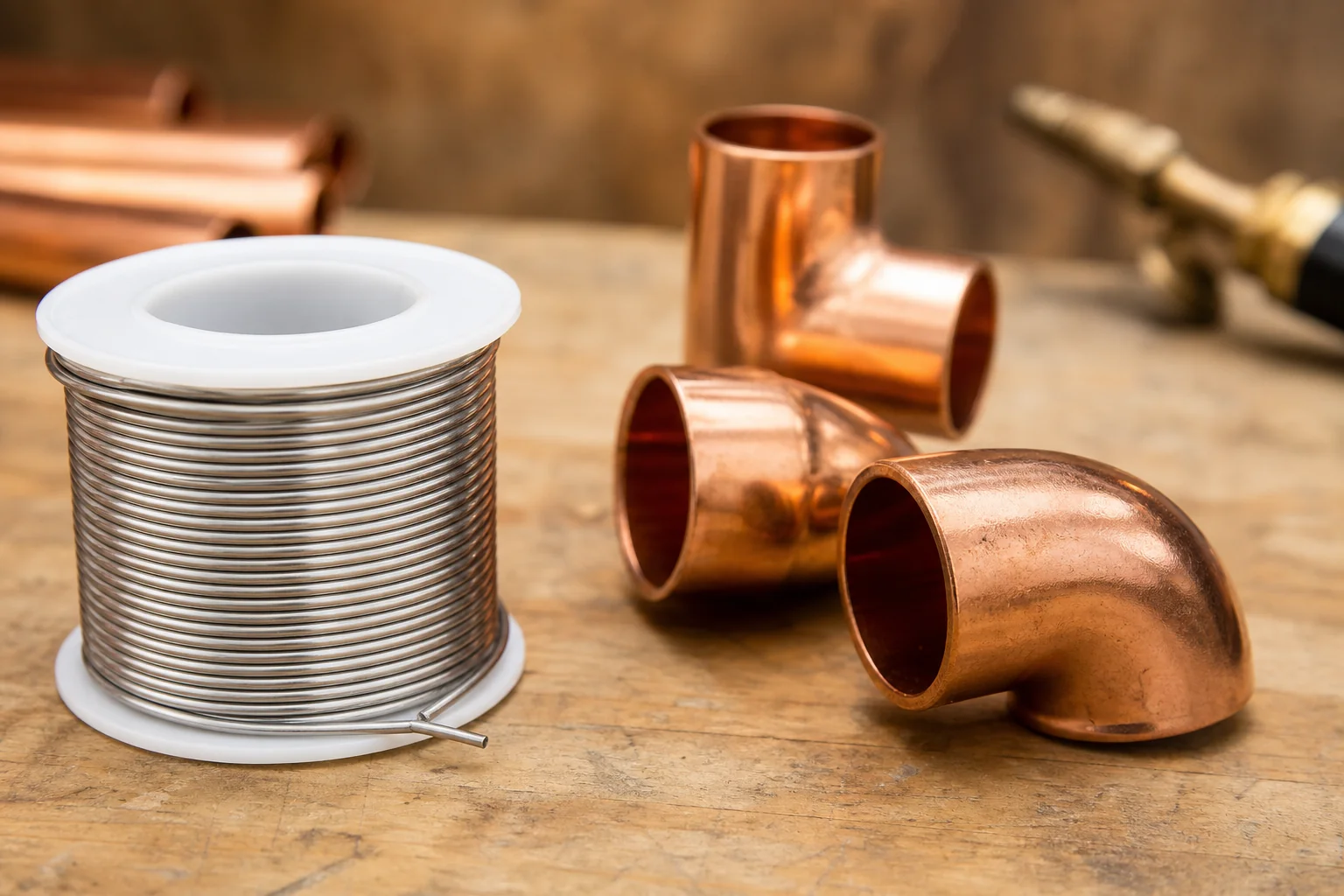
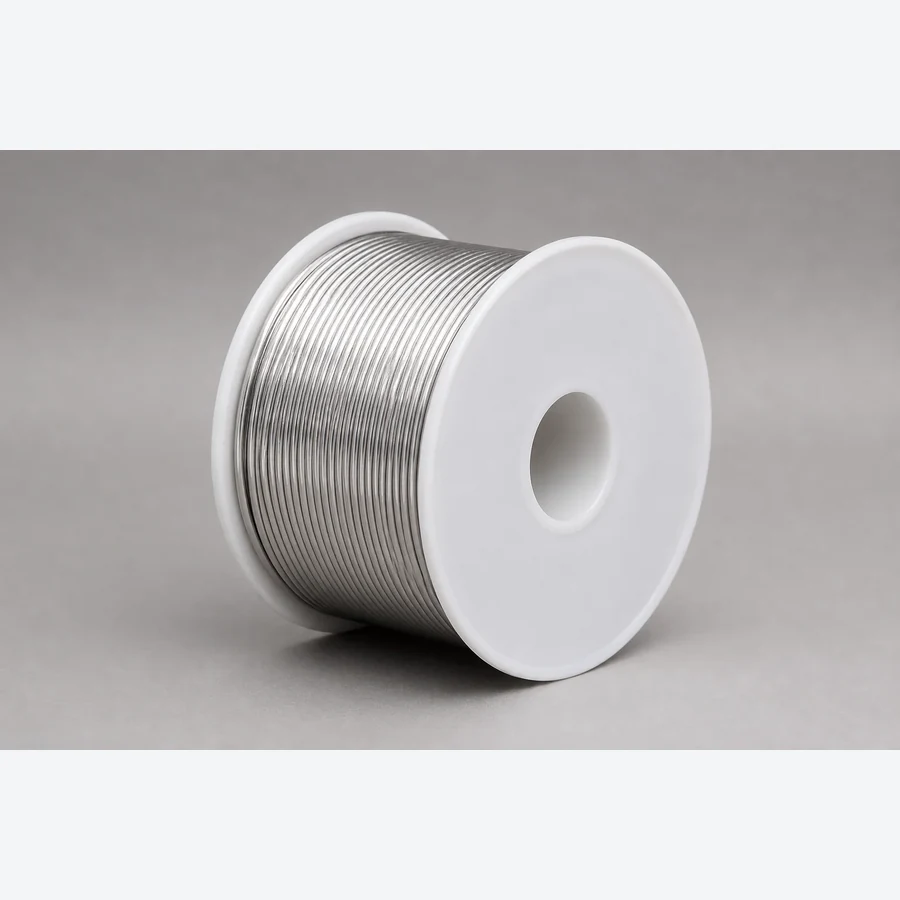
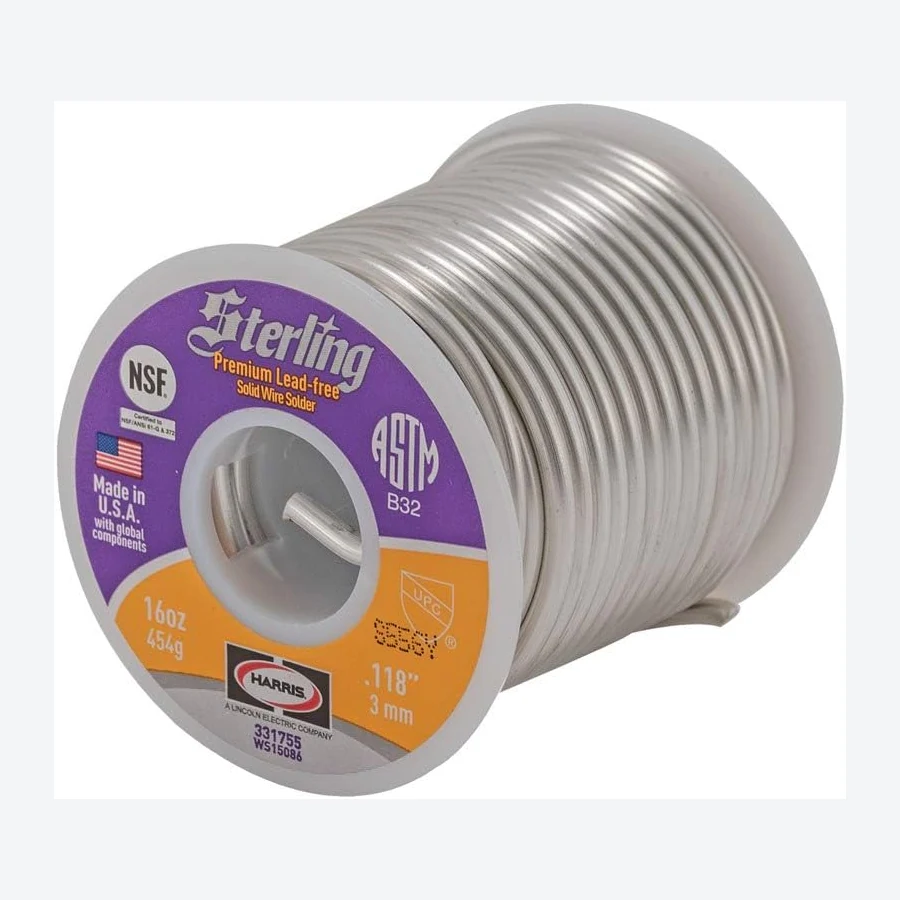
Specifications tell you whether a solder belongs on your copper before you light the torch. Sterling Solder is a lead-free tin-copper solid wire engineered for plumbers, HVAC fitters, and artisans who need predictable flow, code-friendly chemistry, and joints that hold under service pressure. This guide covers alloy makeup, mechanical properties, certification marks, and wire diameters so you can match Sterling to the work on your bench.
Cross-reference our melting point guide for torch technique, the lead-free page for potable water compliance, and silver solder when you need silver-bearing alloy for fine work.
Alloy composition
Sterling Solder is formulated as a tin-copper binary alloy with trace elements tuned for wetting and flow stability. The dominant tin content lowers melting temperature compared to pure copper fillers while maintaining ductility in the solidified joint. Copper in the alloy strengthens the fill and improves adhesion to copper tube and fittings without the toxicity concerns of legacy lead-tin solders.
Unlike high-silver brazing rods, Sterling stays in the soldering temperature band — roughly 410°F (210°C) — so you sweat joints without annealing thin-wall tube or damaging nearby plastic components. Artisans working brass and copper assemblies appreciate the same moderate heat envelope when soldering decorative hardware and instrument parts.
Tensile strength data
Published mechanical data lists 7130 psi tensile strength for properly formed Sterling joints on copper. That figure assumes clean tube, adequate land engagement, full capillary fill, and natural cooldown without quenching. Cold or starved joints will test lower regardless of alloy quality on the spool.
In practice, tensile strength matters most on pressurized water lines and vibration-prone mechanical runs. A full fillet ring at the joint exit is your field indicator that capillary action pulled molten alloy through the fitting cup. If you see a partial ring or grainy texture, inspect before closing walls — strength numbers on paper do not rescue poor technique.
NSF certification marks
Sterling Solder carries NSF/ANSI 61 listing for contact with drinking water system components and NSF/ANSI 372 compliance for lead content limits. Those marks matter on potable copper rough-in where inspectors and engineers verify that filler metal meets health-based standards. Always confirm the current certificate scope on your project submittal — listing categories can differ by product form and diameter.
For commercial kitchens, schools, and municipal work, NSF documentation often rides alongside flux compatibility sheets. Pair Sterling with a flux rated for potable systems and flush lines per local code after cooldown. Our lead-free guide walks through inspection checkpoints plumbers use on trim-out.
Wire diameter options
0.018-inch (1/16″) wire feeds fast into narrow capillary gaps on refrigeration stubs, Schrader ports, and close-tolerance artisan joints. 0.025-inch wire balances feed rate and control for standard 1/2-inch and 3/4-inch plumbing sweats. Larger diameter fills wide cups quickly on DWV transitions where excess wire is easier to trim than starved joints.
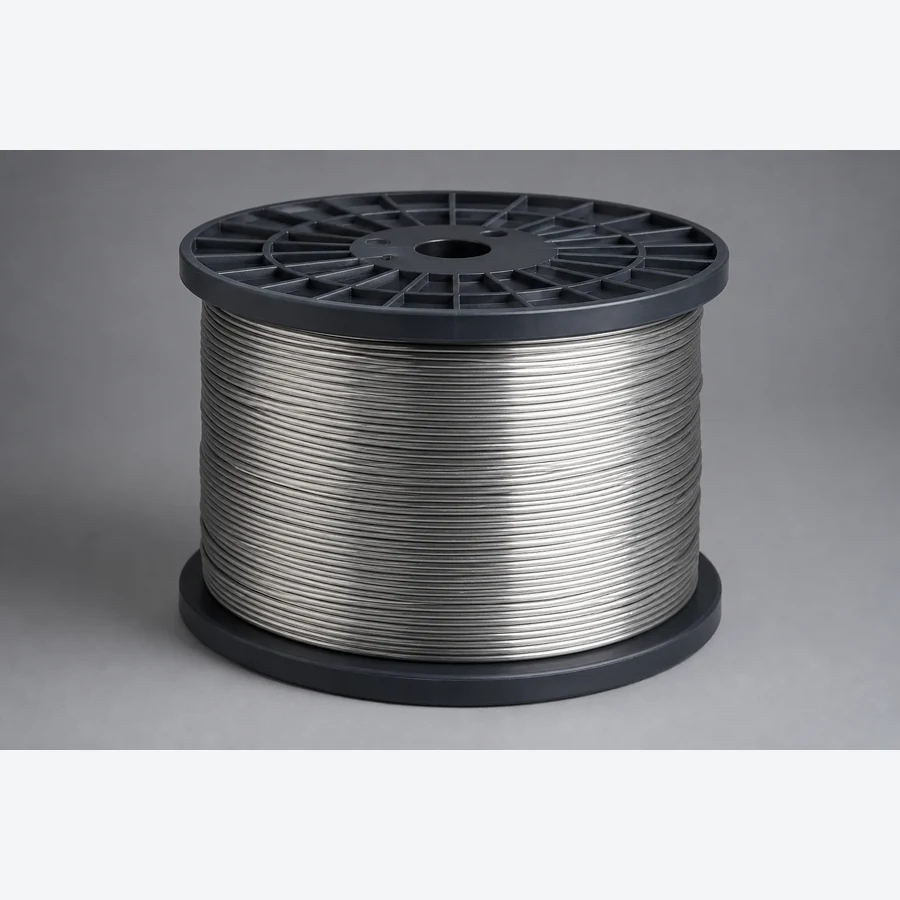
Spool format affects handling as much as gauge. Pocket 4 oz and 8 oz spools suit service trucks; 1 lb and bulk spools reduce changeovers on production benches. Match diameter to cup depth — fine wire on large fittings requires more passes; heavy wire on tight ports can bridge before capillary pull completes.
Melting and flow
Sterling flows in a working window centered on 410°F. The alloy transitions from solid to liquid quickly enough for capillary joints but stays below temperatures that carbonize flux instantly or discolor copper. Heat the fitting mass, not the wire ball, and touch alloy to the joint mouth when flux clears — the same discipline described on our melting point page.
Wide-gap or heavily oxidized surfaces may need fresh flux and slightly longer preheat. Sterling is not a gap-filling paste — capillary action requires mated surfaces within typical soldering tolerances. For vertical or overhead work where wire feed is awkward, consider solder paste variants matched to the same chemistry.
Flux pairing notes
Solid wire Sterling requires separate flux unless you use a cored product specified for your application. Water-soluble fluxes activat near Sterling's melt window and rinse clean for potable lines. Paste flux reduces drip on vertical runs while preserving similar activation timing — critical because overheating after flux burnout produces grainy, low-strength fills.
Never mix incompatible flux chemistry from different brands on the same joint. Residue reactions can pinhole copper and fail pressure tests days later. Store flux capped and replace old tins that have separated or darkened — flux age affects activation more than alloy age for most field crews.
Silver-bearing variants
Standard Sterling tin-copper wire covers most plumbing and mechanical copper. When joints demand finer grain structure or slightly broader wetting on brass transitions, silver-bearing Sterling formulations add controlled silver content for artisan and precision applications without jumping to brazing temperatures.
Silver content shifts flow character and cost. Use silver-bearing wire where fit-up is meticulous and appearance matters — jewelry-scale work, instrument tubing, and visible architectural hardware. Rough-in plumbers often stay on tin-copper Sterling for economy and NSF potable listings on the core line.
Storage and handling
Keep spools dry and free of shop oils. Moisture and contamination on wire surface force you to overheat joints chasing wetting. Rewind loose wraps so the next feed does not kink — kinked wire pauses capillary feed at the worst moment. Field kits belong in sealed compartments away from abrasive grit that scratches copper during prep.
Temperature swings in unheated trucks rarely damage alloy chemistry but can affect flux viscosity. Warm paste flux pockets in your hand before application in winter; cold paste insulates metal and delays heat transfer into the fitting cup.
Quick reference table
Alloy type: Lead-free tin-copper solid wire. Melt point: 410°F / 210°C working range. Tensile: 7130 psi on qualified copper joints. Certifications: NSF/ANSI 61 and 372. Diameters: 0.018″, 0.025″, and production spool sizes. Best for: Copper tube and fittings, potable rough-in, HVAC line sets, artisan copper and brass.
Print this summary for apprentice boards and compare against project specs before first sweat. Sterling delivers consistent chemistry; your prep, flux, and heat control deliver the numbers on the datasheet.